Travelogue by a foreign staff member
Osaka Travel
Hello! My name is Jack, and I lived in Japan for one year on a Working Holiday visa. I moved into J-Hoppers Universal Osaka in October 2025 and stayed until March 2026. While living there, I explored Osaka and the surrounding areas. This blog is about my favourite places I travelled to while living and working at J-Hoppers Universal. I have never written anything like this before, so bear with me.
Hostel Location / Environment
From Ajikawaguchi Station (a five-minute walk from the hostel), it is only an 18-minute train ride to Osaka Station. From J-Hoppers, you can get to pretty much anywhere in Osaka within around 30–35 minutes. Despite its close proximity to Osaka, J-Hoppers is situated in a quiet residential area, far from the busy, chaotic vibe you sometimes get in the city. After a day exploring and walking 10,000+ steps, I like coming home to a quieter, more relaxing environment, which is exactly what I got at J-Hoppers.
Wakayama
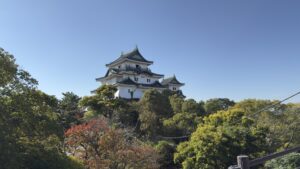
Wakayama is a small city about 90 minutes south of Osaka, accessible by local trains. Visiting Wakayama Castle is an obvious recommendation. However, unlike many castles in Japan, the inside of Wakayama Castle contains much more history and many artefacts, including official documents, samurai armour, and weapons ranging from blades to guns. It is definitely worth paying the small fee to go inside, and there is also a nice view from the top floor.
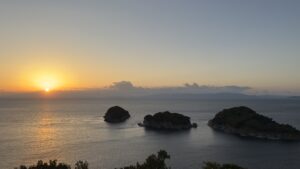
The highlight of Wakayama was definitely Bandoko Garden, a large, traditional, well-maintained Japanese garden located on the side of a cliff. The views overlook the ocean and surrounding islands, and on a clear day before sunset it was one of the best views I saw during my time in Japan.
A five-minute walk from the garden is the Saizaki Signal Tower, a free 24-hour lighthouse observation deck. From here, I saw the best sunset in Japan (in my opinion). Both the garden and tower were very peaceful with few people around, and I highly recommend visiting them if you go to Wakayama.
Kobe
Kobe is accessible within one hour from J-Hoppers by train. Depending on the time of year you visit, the Nunobiki Herb Garden (and the views from the ropeway up to the garden) may be worth a visit. It takes around an hour to explore this spacious flower garden and its attractions. Even if it is not blooming season, there will still be something to see, and the view of Kobe and the ocean from the ropeway alone makes the journey worthwhile.
While there are many places to eat the well-known Kobe beef, I recommend walking through Kobe’s Chinatown, Nankin-machi, which has endless food stalls where you can try something different.
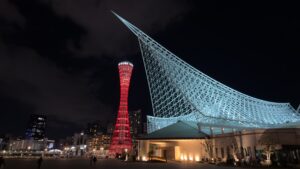
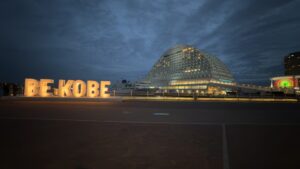
I ended my day in Kobe with a walk around Meriken Park by the harbour. At night, this spacious area lights up and is a really nice place to relax and stroll around in the evening.
Nara
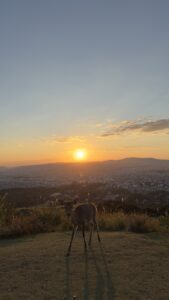
Another day trip from the hostel was Nara, just over an hour away by train. Nara is most famous for its wild roaming deer, of which there are many! After spending half a day exploring the shopping streets and temples, I visited Mount Wakakusa, where many people sit on a large hill to watch the sunset.
When I visited, the gate to the hill closed at 4:30 pm, so it is worth checking the closing time beforehand. Many people gather on the main slope to watch the sunset, but if you don’t mind a steep 10-minute walk, I highly recommend continuing along the path on the left through some woodland. This leads to a much better and quieter hill where you can enjoy an even better view while watching the sunset alongside the deer.
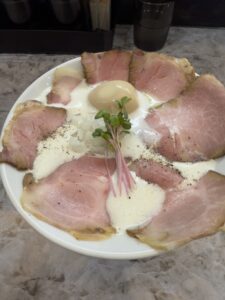
Mount Wakakusa was the highlight of this day trip and is definitely worth visiting. I also recommend Tori NEXT, an amazing ramen restaurant on the way back to the station. My Japanese friends absolutely loved it, and if you love ramen, it is well worth a visit.

Kyoto
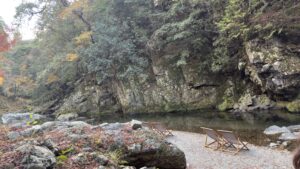
Kyoto is about one hour away by train from J-Hoppers, making it an easy day trip. My first visit started just outside the main city at a lovely traditional Japanese-style café and restaurant in a remote riverside area called Riverside Takao Kyoto, accessible by bus.
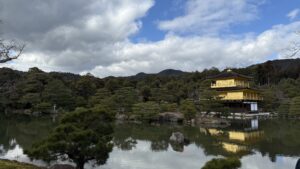
On the way back to the city, I visited Ninna-ji Temple, which has a large Japanese garden and is perfect for a relaxing hour-long walk. I also visited the famous golden temple, Kinkaku-ji, which becomes very busy from midday onwards.
Back in the popular Kyoto-Kawaramachi area, I walked through Nishiki Market, a shopping street full of vendors selling all kinds of food. Thanks to a recommendation from a friend, I ended my day at a very nice rooftop bar called “In The Moon,” which offers great night views of Kyoto and is perfect for a relaxing evening drink.
Since there is so much to see and do in Kyoto, staying at J-Hoppers meant I could visit whenever I wanted without paying for expensive Kyoto hotel stays.
Hikone
Located on the eastern side of Japan’s largest lake, Lake Biwa, Hikone provided a peaceful break from busy Osaka with hardly any tourists. It takes just under two hours to get there, so staying overnight like I did may be worthwhile, although it can absolutely be explored in one day.
I visited Hikone Castle and the nearby large Japanese garden. Hikone also has a local mascot called Hikonyan, who performs small shows at certain times during the day on the castle grounds.
I also walked along the lakeshore, where I could really appreciate how large Lake Biwa is. While Hikone may not be a “must-see” compared to other places on this list, it is definitely worth visiting if you want a quiet break by the lake.
Kanazawa / Shirakawa-go
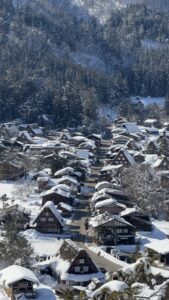
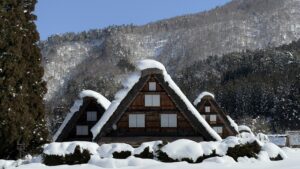
If you are staying in Japan during the snow season, absolutely visit Shirakawa-go.
I travelled to Kanazawa first, spent a day and night there, then visited Shirakawa-go by bus the following morning before returning to Osaka the same day.
Kanazawa took about three hours to reach using a mix of local trains, the Thunderbird limited express, and the Shinkansen. I first visited the castle and neighbouring Kenroku-en Garden, which was beautiful in the snow. There is also a modern art museum nearby if that interests you.
Kanazawa has three samurai districts featuring traditional streets similar to Kyoto but with far fewer tourists. I visited Higashi Chaya, which felt very traditionally Japanese.
Near the castle, I also walked through Omicho Fish Market, where you can try a variety of fresh seafood at reasonable prices.
If you want to treat yourself to a fancy izakaya, I recommend Fuwari. I sat at the counter where chefs prepared delicious food in front of us and happily chatted while cooking. Between myself and my dinner date, we spent around 14,000 yen.
The following morning, I took a bus from Kanazawa Station to Shirakawa-go. I reserved tickets through Japan Bus Online, which I have used for multiple bus reservations and recommend.
When you arrive, pick up a map and you can explore everything within about three hours. Visiting in winter was perfect — the snow piled on the iconic thatched roofs made for incredible photos and memories.
Shimanami Kaido
The best experience of my stay in Japan.
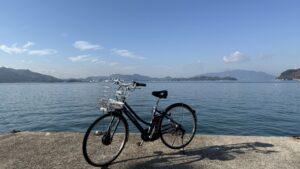
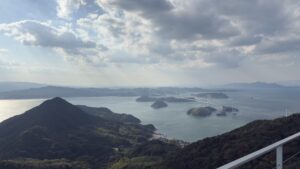
The Shimanami Kaido is a 70 km cycling route in Hiroshima Prefecture connecting beautiful islands via bridges. I started in Onomichi and cycled to Ōshima Island on day one, where I stayed overnight. On the second day, I continued to Imabari before taking a bus to Fukuyama and then the Shinkansen back to Osaka.
Words cannot describe how beautiful this ride was. It was my first time cycling in Japan, but the route is extremely popular and felt very safe despite my initial nerves.
If it is your first time cycling the Shimanami Kaido, I strongly recommend staying overnight halfway and completing it over two days. Even as a relatively fit 26-year-old, completing all 70 km in one day would have left little time for sightseeing or enjoying the many cafés and restaurants along the route.
If available, consider renting a battery-assisted bike. I highly recommend visiting Kirosan Observatory Park near the final bridge — the views were incredible. However, the climb is extremely steep and challenging, so the electric assist made a huge difference.
Staying overnight also allowed time for off-route attractions such as visiting Okunoshima, a small island known for its wild rabbits. It is also the site of former Japanese World War II barracks and poison gas storage facilities. Walking around felt like stepping onto an island frozen in time since the end of the war.
Out of everywhere I visited, if you have the time and good weather, the Shimanami Kaido should be at the top of your list.
Enjoy your stay in Japan 🙂